I am currently not available but feel free to get in touch ! contact me
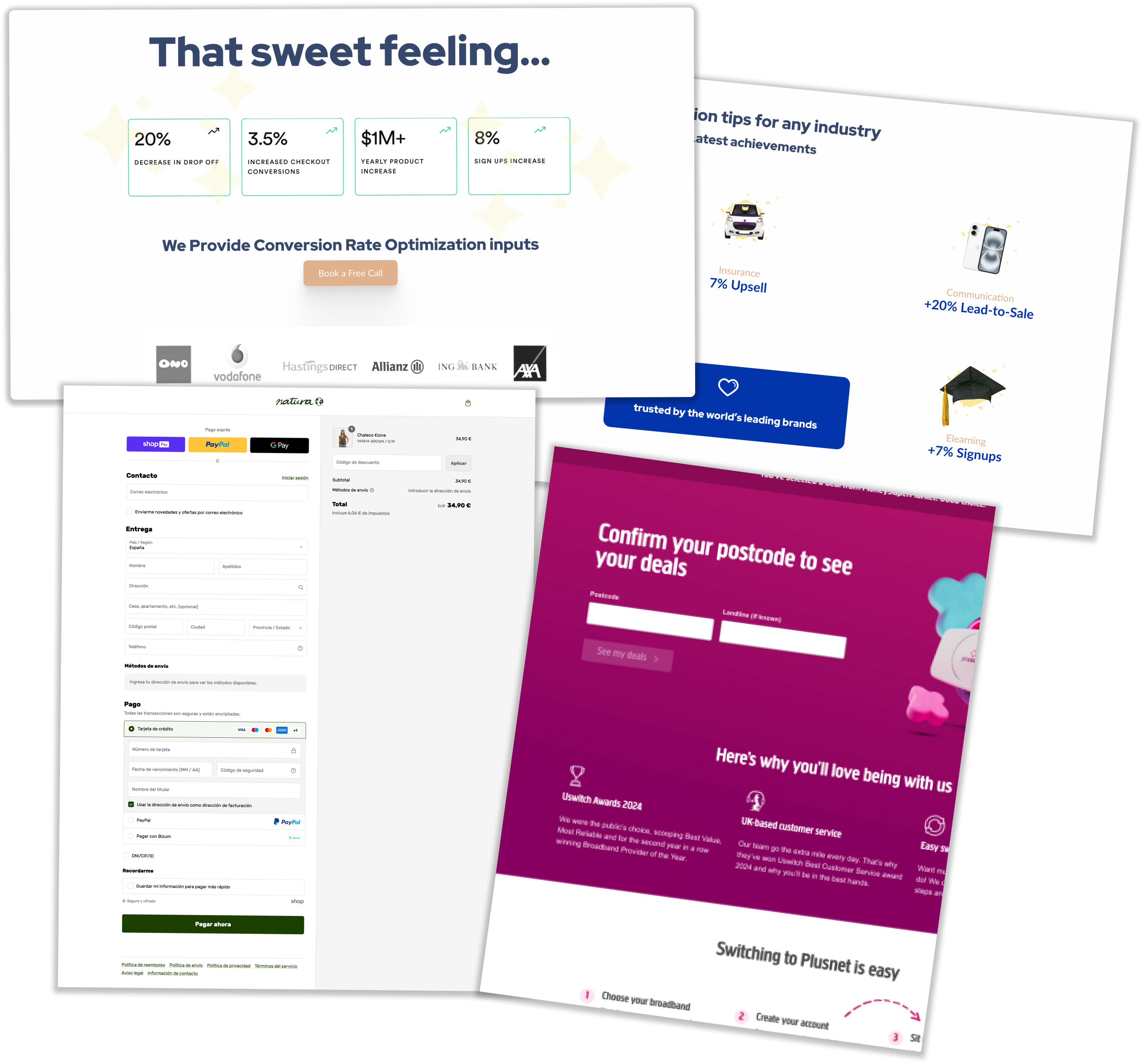
Convy.io Growth Design
Client
Ecommerce, Telco, Insurance, Finance
Years
2015 - 2018
Case
Conversion Rate Optimization
Quick retro on three years running CRO activities
skills I grew
- Conversion metrics
- Communication skills
- Observation and listening
- Behavior design
- Coding/front-end
- Asking good questions!
- Copywriting
- Conversion-optimization design
- Design Ops
- Funnel acquisition metrics
- Revenue model
- Business acumen
- Retention/engagement metrics
- Project Management
- Cross-functional skills
- Product psychology
With Convy we helped clients getting more quality conversion and profits. We helped companies optimize their app or site revenue using proven CRO methodologies.
Process
1_Business analysis and goal definition
Our process was not linear but most of the time the goal of the first meeting we had with the client is to determine their goals and kpi. Our question was simple : for this products, what do you want the user to achieve? It was not always a product sale or a transaction. It could be more iteraction with the product (Landing pages, Onboarding, signups, social media shares, reviews or comments). But by far, The area we became expert in was improving checkouts and signup funnels for some ecommerce but mainly insurance, energy and telco companies. Here are a couple of examples of areas we provided support to clients :
- Telco service subscription landing pages design
- Insurance subscription landing pages design
- Checkout processes improvements
- User journeys improvements
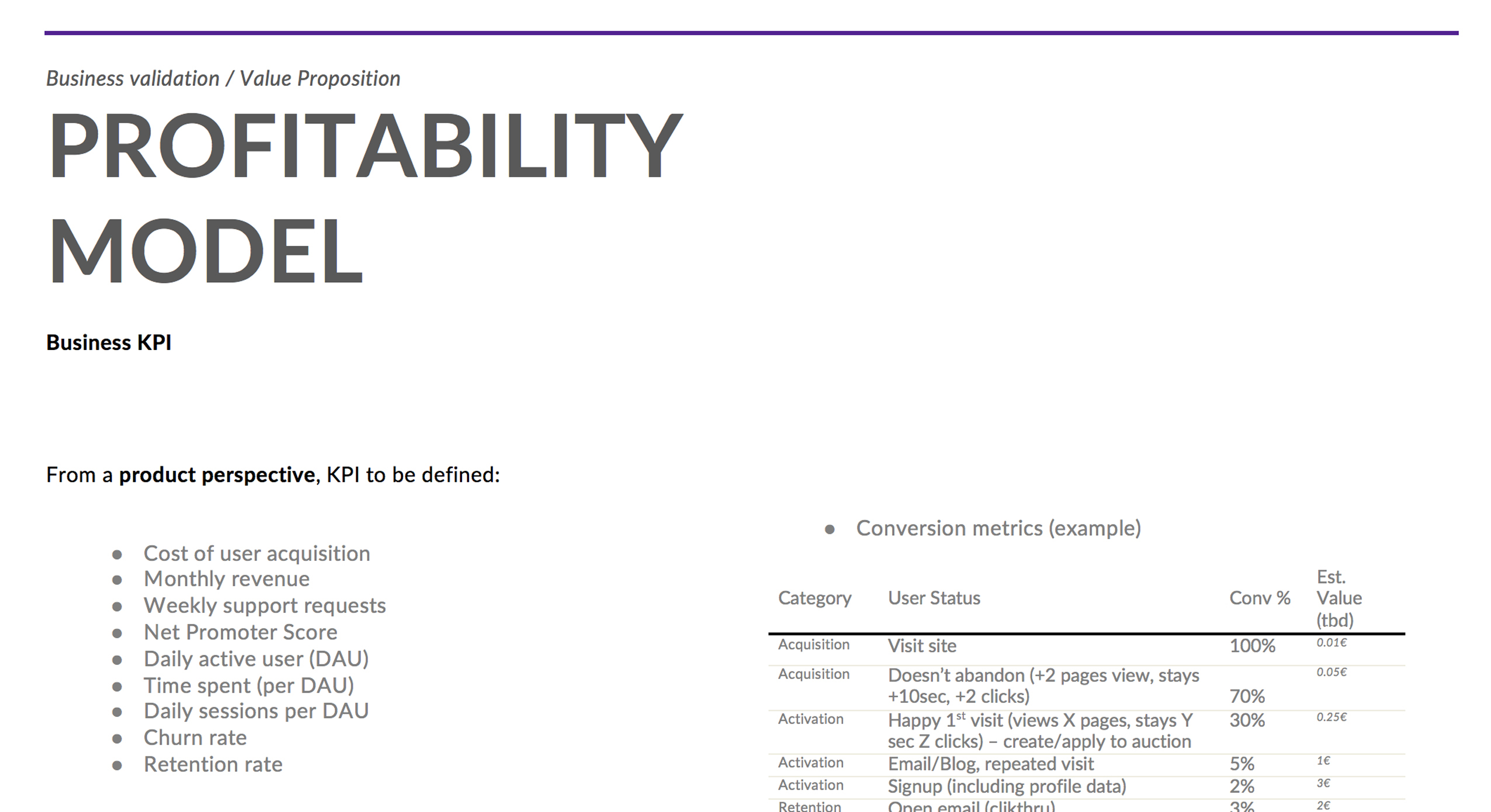
defining KPIs helps us understand the product and foresee the design strategy to implement
Deliverables / Methods
Business analysis output presentation, list of expected output areas (funnels, landing pages...), products KPIs, objectives priorization, SWOT analysis, Strategic Orientation Draft2_Audit
Qualitative review
Once the business goals had been clearly identified we just ran and documented an heuristic evaluation of the current conversion funnels in order to achieve this goal. We basically put ourselves in the customer's shoes and took notes of the pain points of the process in multiple areas and where it could potentialy be improved. When possible, we tried to involve users in order to get their feedback when using the product. We also had a look at what the competitors do for a similar process and what the users thought about it.
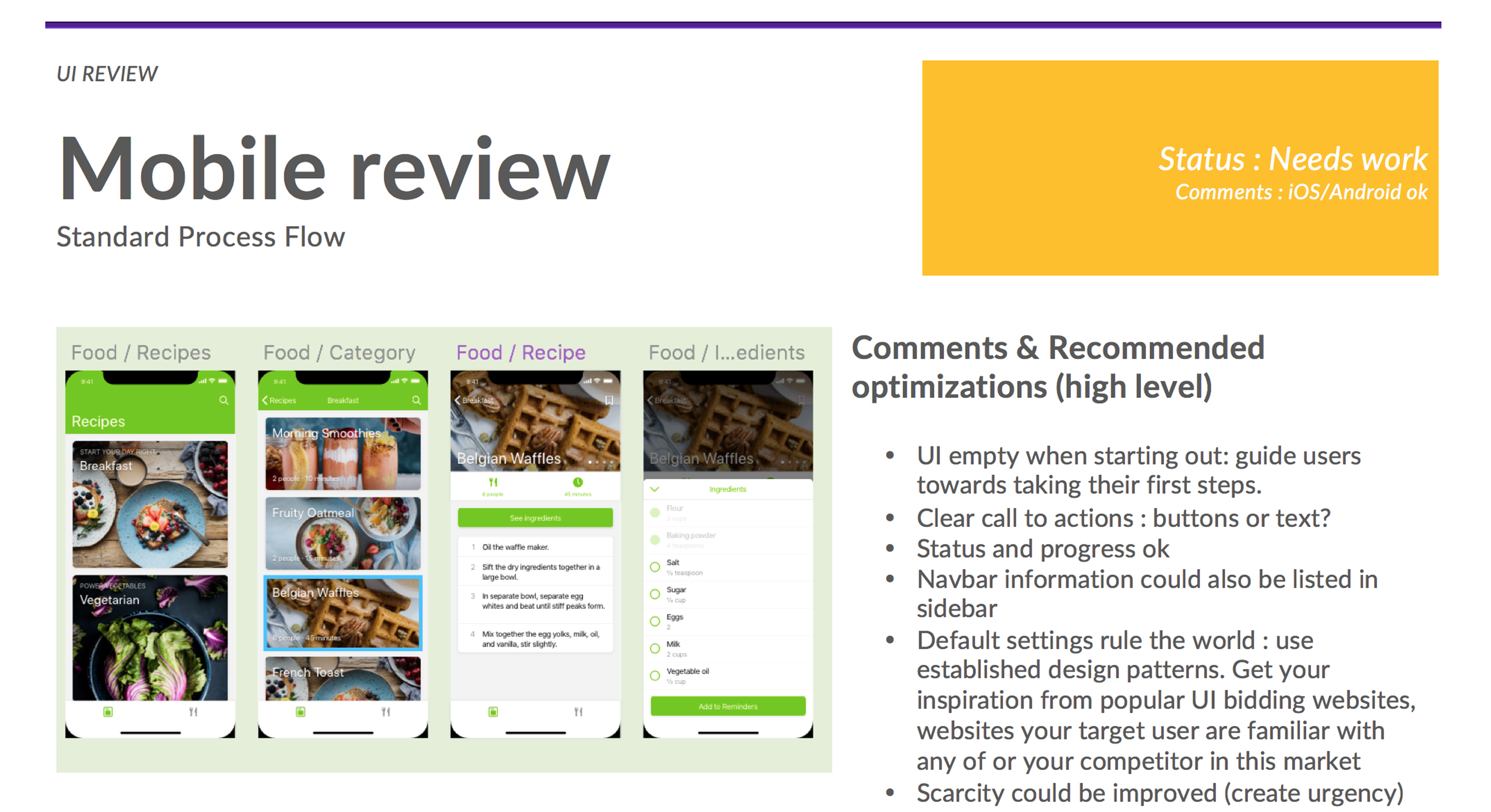
Our reviews were business (behavior design) and performance oriented
Deliverables / Methods
Strategic orientation documentation suite including : current user journey review (from an UI and more product-psychology focused POV). For some specific projects we expanded the data source outside the product including inputs from the CRM systems, Social media posts, call center logs and online surveys.Quantitative review
We had a close look to the analytics of the funnels. We implemented trackers in order to get to know what people were doing in the funnel. We measured qualified and unique visits to the product including our target user (people that can actually be interested to complete the process - excluding some tourists users from other locations for example). We also listed the conversion rate based on the traffic sources for this specific product (Referring, Social Medias, Ads, Content, Searches...). At this point we already had some assumptions and design hypothesis to discuss with business stakeholders.
Deliverables / Methods
Analytics, mixpanel.3_Optimization
We provided educated design decisions based on the product data collected so far, our experience and our large testing database. These decisions were discussed and validated by business stakeholders. We started to implement our a/b testing or create a prototype with suggested changes if we suggested a radical product change. Getting to code and using it for design exploration is always better than static design. It allowed people to see the process in context and take better decisions. Our clients saved money on development and redesign costs when we start working on prototype. Once the tests are implemented we monitored closely each conversion rate.
front-end checklist is an efficient first step in performance review
Some of the most common issues were related to :
- - Misalignment between users' hopes and offer
- - Missing visual hierarchy
- - Information overload
- - Lack of trust indicators
- - Missing progressive disclosure (too much text)
- - Hick's law : too many alternatives
- - Small UI bugs
- - Missing affordance
- - Missing authority / social proof
- - Bad responsiveness of website
- - Missing progress and status
- - Basic processes not being defaulted (we are creatures of habit!)
- - Lack of personality and emotion
Some of the most common optimization quick-wins were related to :
- - Alignment between users' hopes and offer
- - Adjustment to user mental model
- - Reducing cognitive load
- - Show benefits
- - Reassurance
- - Anchoring (offer information to trigger evaluation)
- - Feature discoverability
- - Good QA!
- - Provide feedback
- - Being transparent in the process
- - Not being manipulative.
- - User Journey steps reordering
- - Better form design (breadcrumbs)
Deliverables / Methods
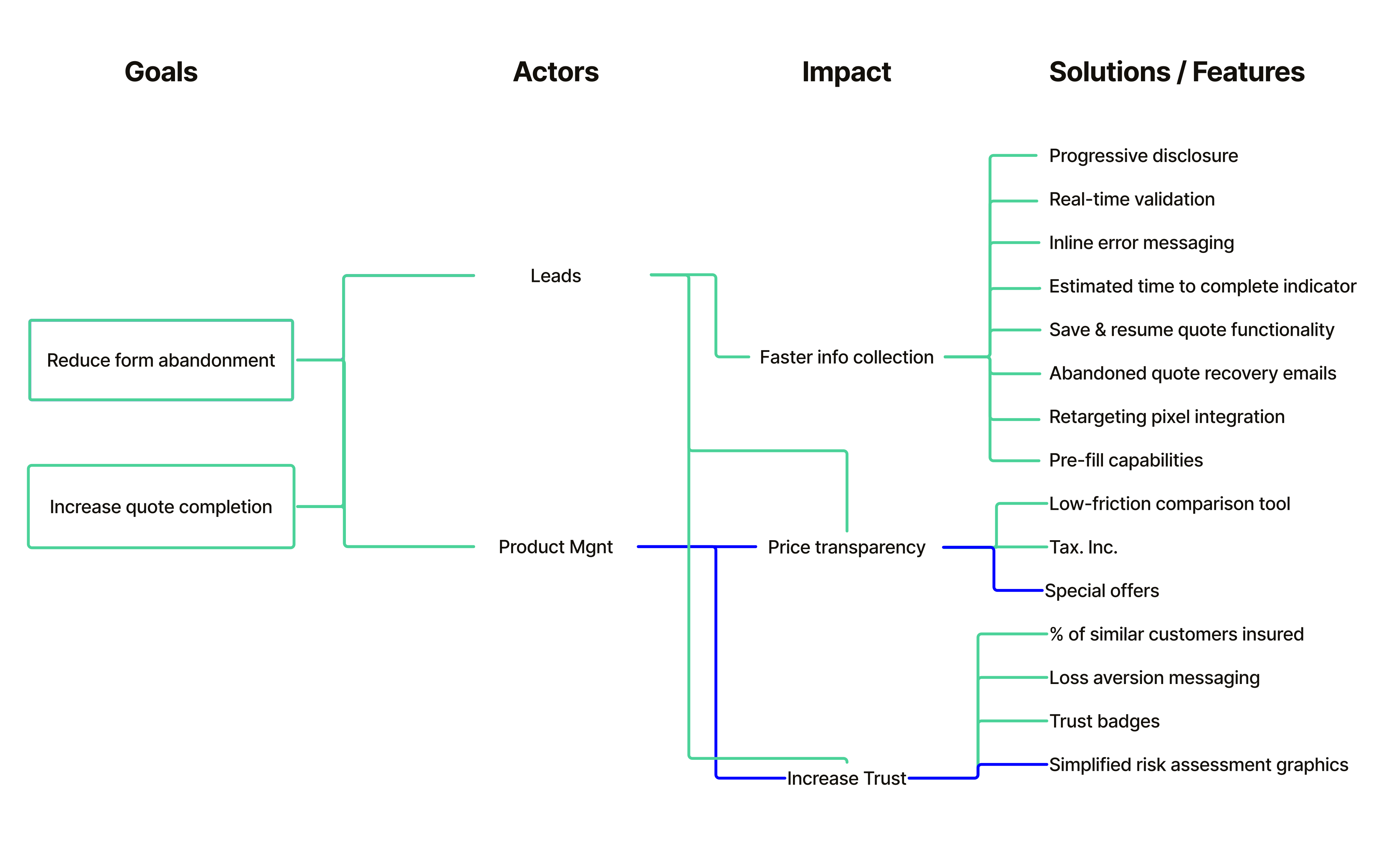
Impact Maps, Figma hi-fi wireframes, git branch, Figma hi-fi prototype, Formal presentation, a/b testing proposals, Product design decisions rationalization documentation4_Iteration
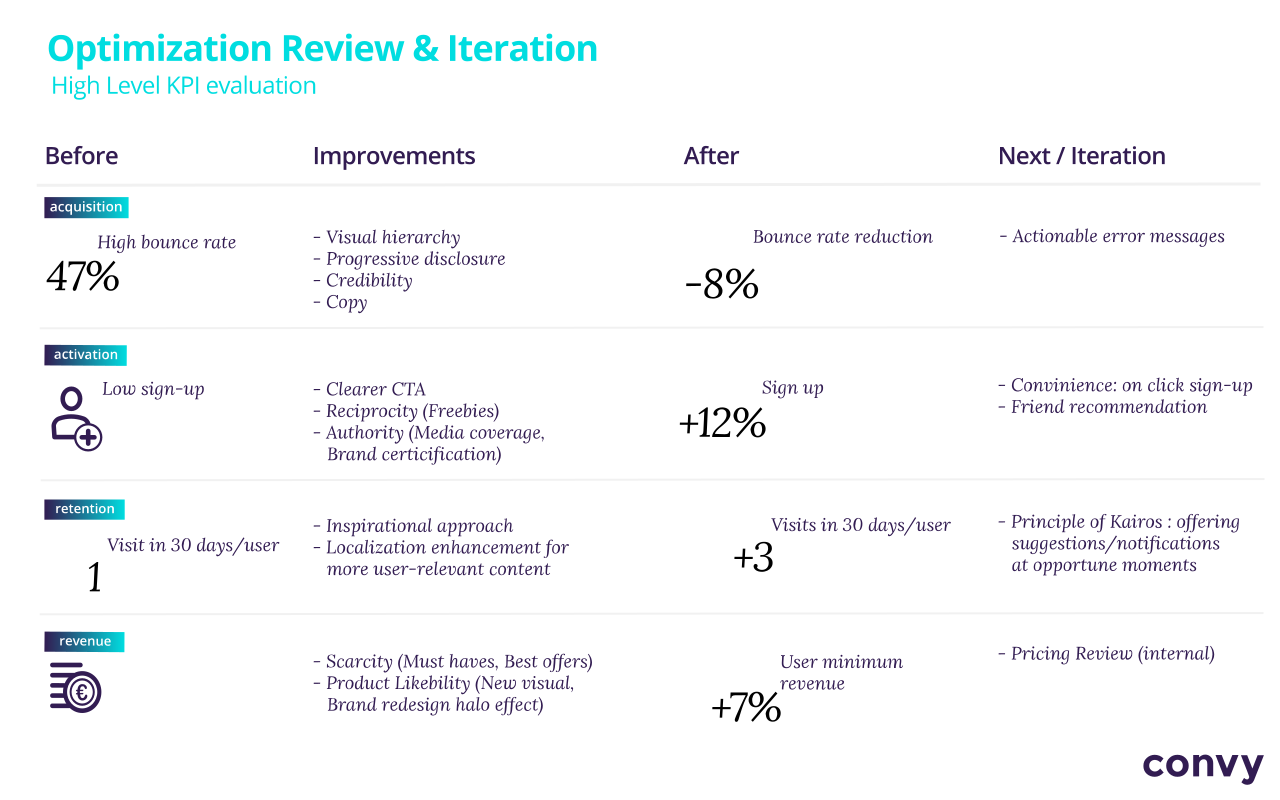
metrics update after change implementation
A month or two after the testing implementation, we shared the metrics from the test phases with business stakeholders, collected feedbacks from everybody (users and business) and monitored the impact various areas. We then decided on what came next. We liked to work as a partner of the client success and make sure their revenue kept growing. We also listed all the implemented tests and improvements. Most company forget to document the output, it is the last phase of our process. Improving UX and conversion is a continuous process.
MVPs for start-ups
We helped our clients launching new digital products in all the phases of the conception of their MVP from framing definition of the competitive landscape, value proposition / identified opportunities, profitability model / metrics and growth perspective to technology and Key features for MVP (Buyer user journey and features, features priorization, Selected features for MVP vs Competition, technical effort estimation).
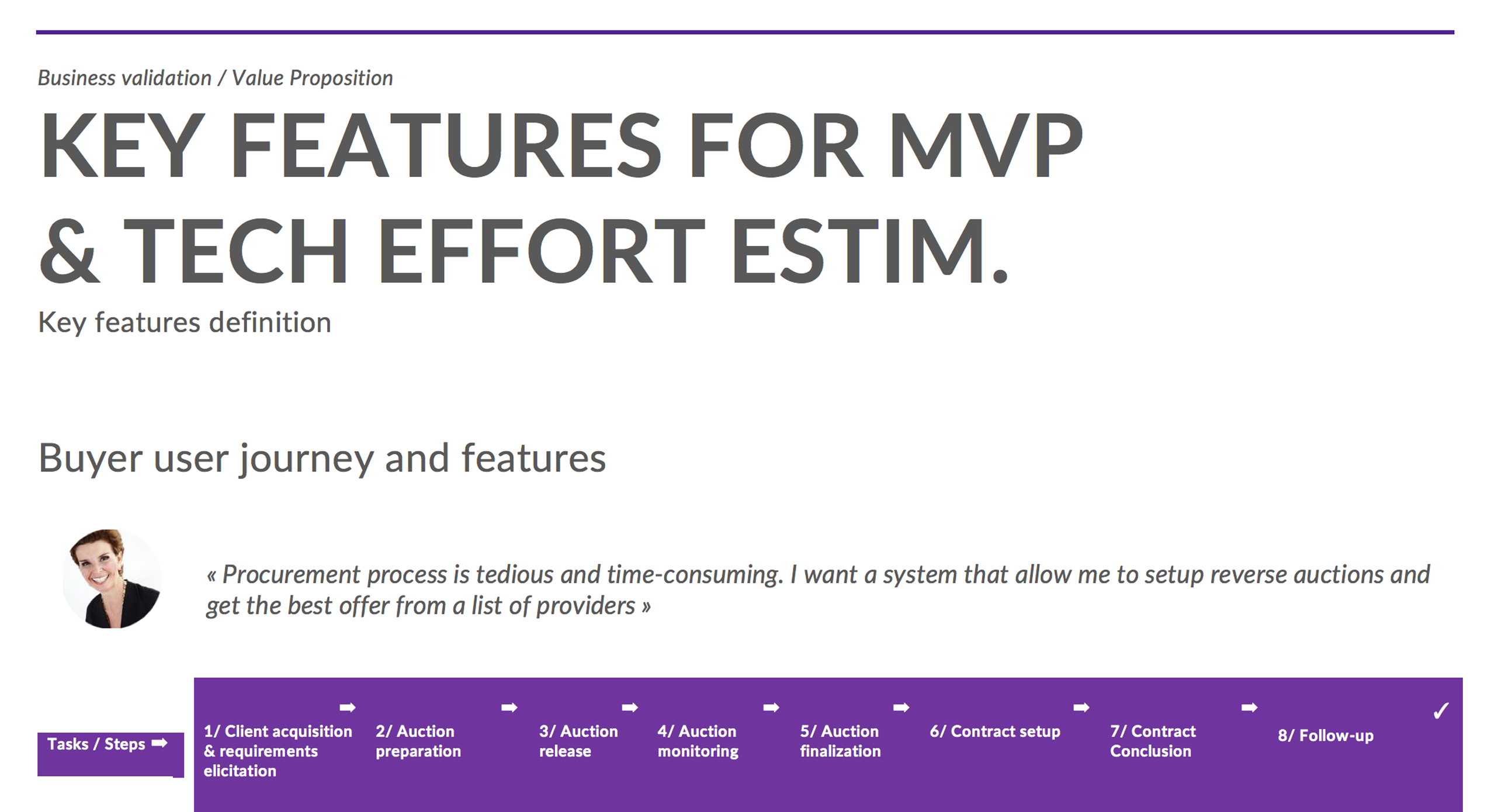
working document mixing user journey and associated features for priorization
Skills I grew running CRO consulting for 3 years
- Conversion metrics
- Communication skills
- Observation and listening
- Behavior design
- Coding/front-end
- Asking good questions!
- Copywriting
- Conversion-optimization design
- Design Ops
- Funnel acquisition metrics
- Revenue model
- Business Accumen
- Retention/engagement metrics
- Project management skills
- Cross-functional skills
- Product psychology
Since you are here
My goal is to help you create great and profitable products.
If you drop me a line about your work and the challenges you face I will reply with some suggestions (I always do).
You can also directly schedule a call.
Thank you for your interest.
I work from France and Spain. GMT Time zone UTC +0, London time.

